People searching for should i use endbugflow software for making music are usually trying to answer one important question before investing their time in learning a new application. With dozens of music production programs available today, choosing the right software can significantly affect both creativity and workflow.
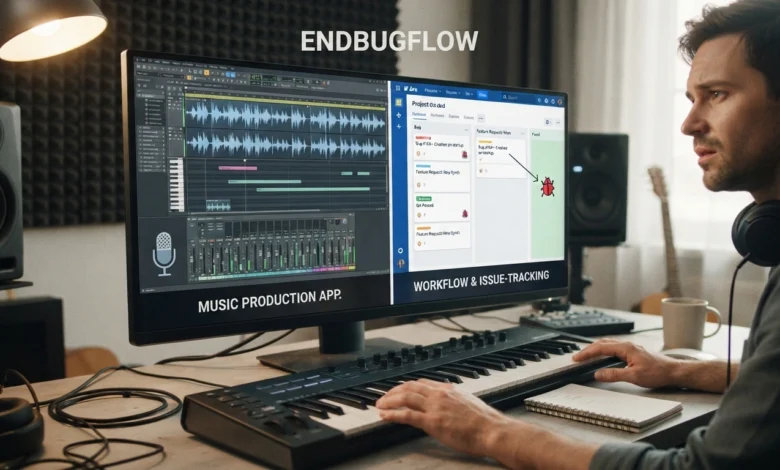
One reason this keyword has gained attention is that information about EndBugFlow is inconsistent. Some websites describe it as a beginner-friendly music production application, while others identify it as a workflow or issue-tracking platform rather than a traditional Digital Audio Workstation (DAW). These conflicting descriptions naturally leave users wondering whether EndBugFlow is actually suitable for producing music.
The answer depends on what version of EndBugFlow is being discussed and what type of music production workflow you need. Before choosing any software, it is important to understand its capabilities, limitations, and whether it includes the tools required for recording, editing, arranging, and exporting music.
This guide explains what EndBugFlow appears to offer, who may benefit from using it, and how to decide whether it is the right choice for your music production needs.
Why People Are Asking About EndBugFlow
Interest in EndBugFlow has grown because the software is being discussed across different websites and online communities. However, not every source describes the software in the same way.
Some articles present EndBugFlow as a music creation application designed for beginners that simplifies recording, arranging, and editing tracks. Other sources explain that it is not a Digital Audio Workstation at all and instead focuses on software development workflows. These contradictory descriptions make it difficult for users to determine what the software actually does.
For someone who simply wants to create beats, record vocals, or produce songs, this uncertainty becomes frustrating. Instead of finding a clear answer, users often discover completely different explanations depending on which website they visit.
Because of this confusion, many musicians compare EndBugFlow with established music production software before deciding whether it deserves a place in their workflow.
See Also: Activevitalspark Com: Content Topics Features and What to Know
What EndBugFlow Appears To Be
Based on currently available information, EndBugFlow does not have a universally accepted description.
Some sources describe it as software intended for music creation with an interface that helps beginners arrange tracks, experiment with sounds, and complete projects more efficiently. These descriptions position it as an accessible alternative to larger music production applications.
Other sources, however, explain that EndBugFlow was designed for software development and project management rather than audio production. According to those descriptions, it lacks the recording, MIDI sequencing, mixing, and mastering capabilities expected from professional music software.
Because these explanations conflict, anyone considering EndBugFlow should verify the specific version, available features, and official documentation before deciding whether it meets their music production requirements.
Rather than relying only on third-party reviews, musicians should compare the available features against their own creative goals. If the software cannot support recording, editing, mixing, exporting, or plugin integration, it may not be suitable as a primary music production application.
Can You Actually Make Music With EndBugFlow
Whether EndBugFlow can be used for music production depends entirely on the features included in the version being evaluated.
If the software provides audio recording, timeline editing, virtual instruments, MIDI support, effects processing, and project exporting, it may be capable of handling basic music creation tasks. Such features are commonly found in entry-level Digital Audio Workstations and allow users to compose songs, arrange tracks, and produce simple recordings.
However, if EndBugFlow lacks these essential capabilities and instead focuses on software development workflows or project management, it should not be considered a replacement for dedicated music production software.
Before downloading or purchasing any application, musicians should confirm that it supports the specific workflow they need. Recording artists, producers, beat makers, and composers often require features such as multitrack editing, plugin compatibility, automation, and high-quality audio export. Verifying these capabilities in advance helps avoid choosing software that cannot support future creative projects.
Features To Check Before Using It
Before deciding whether EndBugFlow fits your workflow, it is worth comparing its capabilities with the features commonly expected from modern music production software. Looking beyond marketing claims helps determine whether the application can support your creative goals.
Audio Recording
The first feature to check is whether the software allows direct recording through microphones or audio interfaces. Artists who record vocals, guitars, podcasts, or live instruments need stable recording tools with good audio quality.
MIDI Support
Many producers rely on MIDI keyboards and virtual instruments when creating melodies, drum patterns, and orchestral arrangements. If EndBugFlow supports MIDI input and editing, it becomes much more useful for electronic music production.
Multi Track Editing
Professional music projects often contain multiple tracks, including vocals, drums, bass, keyboards, effects, and background instruments. A good music application should make it easy to arrange, edit, mute, duplicate, and organize these tracks.
Plugin Compatibility
Many producers expand their workflow using virtual instruments and audio effects. Compatibility with common plugin formats allows users to add synthesizers, equalizers, compressors, reverbs, and other creative tools without being limited by the built-in features.
Mixing And Effects
Music production does not end after recording. The ability to adjust volume levels, stereo placement, equalization, compression, delay, and reverb plays an important role in producing balanced and professional sounding tracks.
Export Options
Finished projects should be exportable in widely supported audio formats. Flexible export settings help creators share music across streaming platforms, social media, clients, or collaborative projects.
Evaluating these features provides a much clearer picture than relying only on promotional descriptions.
Advantages
If the available descriptions accurately reflect a music production version of EndBugFlow, several potential advantages stand out.
One possible benefit is a simplified interface that focuses on essential functions instead of overwhelming new users with hundreds of advanced controls. Beginners often learn faster when software presents tools in a logical and organized way.
Another advantage may be a shorter learning curve. Many professional Digital Audio Workstations require significant practice before users become comfortable with recording, arranging, and mixing. Simpler software can help new producers start creating music more quickly.
A lightweight application may also perform better on computers with limited hardware resources. Users without high-end systems often appreciate software that runs efficiently without requiring expensive upgrades.
For hobby musicians, students, or creators producing basic music projects, these characteristics can make learning less intimidating.
Limitations
Despite its potential strengths, there are several limitations users should consider before choosing EndBugFlow for serious music production.
The biggest concern is the lack of consistent information about what the software actually offers. Different sources describe completely different purposes, making it difficult to verify whether the application truly supports professional audio production.
If important features such as multitrack recording, MIDI sequencing, automation, plugin support, or advanced mixing tools are unavailable, users may quickly outgrow the software as their skills improve.
Another limitation is the relatively small community surrounding EndBugFlow. Established music production programs benefit from thousands of tutorials, forums, templates, presets, and educational resources. A smaller user base usually means fewer learning materials and less community support when problems occur.
Long-term updates are another factor to consider. Music software continues evolving with new operating systems, audio hardware, and plugin standards. Choosing software with regular development and ongoing support often provides better long-term value.
Who Should Consider Using EndBugFlow
EndBugFlow may be worth exploring for users who are experimenting with music production and want to evaluate different software before committing to a professional Digital Audio Workstation.
Beginners who are learning basic recording concepts may appreciate software with a simple workflow if it includes the essential music creation features they need.
Students studying digital music production may also find it useful for introductory projects, provided the software supports recording, editing, and exporting audio files.
Casual hobbyists creating simple demos, practice sessions, or personal projects may not require every advanced feature found in professional applications.
However, anyone planning to produce commercial releases, collaborate with other musicians, or build a long-term production workflow should carefully compare EndBugFlow with more established music production software before making a final decision.
Who Should Choose Another Music Program
While EndBugFlow may be suitable for experimentation or basic creative projects, it may not be the best option for every musician. The right software depends on the type of work you plan to produce and the features you require.
Professional producers generally need advanced recording, detailed MIDI editing, flexible automation, high-quality mixing tools, and reliable plugin support. These capabilities are essential when creating commercial music or working with clients.
Artists who regularly record vocals, live instruments, podcasts, or orchestral arrangements also benefit from software designed specifically for professional audio production. Stable performance, project compatibility, and efficient workflow become increasingly important as projects grow in complexity.
Musicians collaborating with others should also consider whether the software supports common file formats and integrates well with widely used production workflows. Using an application that few collaborators recognize can create unnecessary challenges when sharing projects.
If long-term growth is your goal, choosing a well-established Digital Audio Workstation may provide better learning resources, stronger community support, and greater flexibility as your skills improve.
Better Alternatives For Music Production
If your primary objective is producing music, several established applications have proven themselves over many years of development.
FL Studio is popular among beginners and electronic music producers because of its intuitive interface and powerful pattern-based workflow.
Ableton Live is widely used for electronic music, live performances, and creative sound design thanks to its flexible session view and advanced production tools.
Logic Pro provides a comprehensive music production environment for Mac users, including virtual instruments, recording tools, mixing features, and professional effects.
Reaper is known for being lightweight, affordable, and highly customizable. Despite its small installation size, it includes many advanced production capabilities.
Studio One offers a modern workflow with powerful recording, editing, and mastering features suitable for both beginners and experienced producers.
Each application has different strengths, so the best choice depends on your experience level, preferred music genre, computer system, and production goals.
How To Decide If It Fits Your Workflow
Choosing music software should be based on practical requirements rather than online trends.
Start by identifying the type of music you want to create. Beat makers, vocalists, composers, podcasters, and film scorers often require different production tools.
Next, compare the software’s available features with your current workflow. Recording support, MIDI editing, plugin compatibility, audio quality, export options, and ease of use all influence daily productivity.
Budget is another important consideration. Some applications require a one-time purchase, while others offer subscription models or free versions with limited functionality.
Finally, think about future growth. Beginners often progress quickly, so selecting software that can continue supporting more advanced projects may reduce the need to switch platforms later.
Testing a trial version, when available, is usually the best way to determine whether an application feels comfortable and meets your creative expectations.
Final Verdict
The answer to should i use endbugflow software for making music depends on the software’s actual capabilities and your production goals.
Because information about EndBugFlow remains inconsistent, it is important to verify its recording features, editing tools, plugin compatibility, and export options before relying on it for serious music production.
If the software includes the features needed for your workflow, it may be suitable for learning, experimentation, or simple music projects. However, users planning to produce professional recordings, collaborate with other musicians, or build a long-term production setup may benefit more from established Digital Audio Workstations that offer mature feature sets, regular updates, and extensive community support.
Making the right choice ultimately comes down to selecting software that supports both your current needs and your future creative ambitions.
FAQs
Should I use EndBugFlow software for making music?
It depends on the version and features available. Before choosing it, verify that it supports recording, MIDI editing, audio export, and other music production tools you need.
Is EndBugFlow a Digital Audio Workstation?
Information available online is inconsistent. Some sources describe it as music production software, while others associate it with software development workflows, so users should verify its capabilities before using it.
Can beginners create music with EndBugFlow?
If the software includes basic recording and editing features, beginners may find it suitable for learning fundamental music production concepts.
Does EndBugFlow support music plugins?
Plugin support depends on the version being used. Users should confirm compatibility with virtual instruments and audio effects before starting a project.
What are good alternatives for music production?
Popular alternatives include FL Studio, Ableton Live, Logic Pro, Reaper, and Studio One. These applications are widely used for recording, editing, mixing, and producing music.
Should professional musicians rely on EndBugFlow?
Professional users should first verify that the software provides the advanced recording, editing, mixing, automation, and plugin capabilities required for commercial music production.