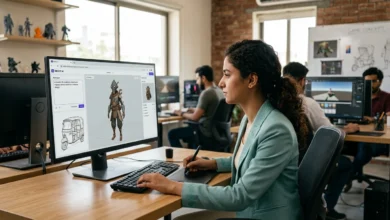
Artificial intelligence is everywhere now — people use it to search for information, streamline business operations, generate content, crunch data, and support everyday decisions. As the technology keeps advancing, one question keeps surfacing: will AI take over the world?
The short answer is no. Today’s AI systems can’t control society, set their own goals, or act independently of human input. They’re built to handle specific tasks based on human instructions, available data, and built-in limitations.
That said, AI is genuinely reshaping how people work. The real concern isn’t machines seizing control of the planet it’s how automation reshapes careers, industries, and the skills people will need going forward.
Table of Contents
Will AI Take Over the World?
Short answer: No. AI can’t take over the world because current systems have no consciousness, no personal intentions, and no independent decision-making ability. They operate inside boundaries humans set, and they depend on human infrastructure and oversight to function at all.
The “AI takeover” idea owes a lot to science fiction, where machines become self-aware and push humans aside. Real-world technology doesn’t work that way.
Modern AI tools are built for narrow purposes. One system might help draft content, another might analyze data, another might assist with medical research or business operations. None of them understand the world the way a person does, and none of them invent their own objectives.
A company might use AI to analyze customer data or automate repetitive work, for instance, but the system isn’t setting company policy or deciding strategy on its own — a person still is.
The realistic impact is tied to automation and workplace change instead. Repetitive tasks are getting faster and easier, while skills like creativity, leadership, emotional intelligence, and judgment stay valuable. The conversation is shifting away from a fictional takeover and toward more practical questions — responsible use, job changes, privacy, and how society adjusts to new tools.
Why Are People Worried About AI?
Short answer: People are uneasy because AI is advancing fast and can now do things only humans used to do. The core worries center on jobs, misinformation, privacy, and how businesses will adapt.
Not long ago, AI felt like something confined to research labs and big corporations. Now it’s in the hands of millions of everyday users, helping with writing, images, code, customer service, and data analysis.
That speed has bred uncertainty. A lot of workers are wondering whether their careers are about to shift or whether the skills they’ve built will stay relevant.
Common worries include:
- Will automation shrink job opportunities?
- Will companies swap employees for software?
- Will it get harder to spot fake information?
- Will people lean on technology too much?
Most online discussion isn’t really about robots ruling humanity — it’s about economic disruption. Many people think the real challenge will be helping workers move into new roles as AI becomes embedded across more industries.
Worth remembering: earlier technologies caused similar anxiety. Computers, the internet, and automation all displaced certain tasks while also creating entirely new industries and jobs. AI is expected to follow roughly the same arc.
Also Read: AI Music Maker Create Songs Lyrics and Music Online for Free
What Do Experts Predict About AI’s Future?
Short answer: Most experts expect AI to transform jobs and industries rather than wipe out entire professions. The future likely looks like people working alongside AI tools while focusing on the parts of work that need judgment, creativity, and human interaction.
Discussions about AI’s future tend to center on automation, productivity, and how work itself changes — not on whole professions vanishing. Many researchers think AI will first reshape specific responsibilities within a job before it reshapes the job itself.
A financial worker might use AI to organize information but still make the important calls. A designer might use AI to speed up idea generation but still steer the creative direction. A teacher might use AI to help prep materials while still focusing their energy on students.
The effect will vary by industry — jobs built around repetitive tasks will likely see bigger shifts, while work requiring physical skill, emotional understanding, leadership, or complex judgment will stay more dependent on people.
Adaptability matters here too. Workers who keep learning and stay comfortable with new tools are likely to find more opportunities as the economy shifts around AI.
The future isn’t shaping up to be a clean swap of humans for machines — it’s a gradual redistribution of responsibilities alongside new kinds of work emerging.
How Is AI Changing the Workplace?
Short answer: AI is changing workplaces by taking on repetitive tasks, boosting productivity, and helping professionals get more done. Most jobs are expected to evolve rather than disappear outright.
Businesses are already leaning on AI for practical work — organizing information, analyzing data, improving customer communication, automating routine processes.

The biggest shift is that employees may spend less time on repetitive busywork and more time on strategic thinking.
A marketing team might use AI to analyze customer behavior but still build the actual campaign strategy themselves. A business analyst might use AI to process large datasets but still interpret what the numbers mean and decide what to recommend.
That means future workers will likely need both deep expertise in their field and comfort working alongside new tools.
The skills likely to matter most:
- Critical thinking
- Communication
- Problem-solving
- Creativity
- Leadership
- Adaptability
AI can take certain tasks off someone’s plate, but human judgment stays essential wherever there’s real responsibility, ethics, or consequence involved.
Will AI Replace Accountants?
Short answer: No. AI won’t fully replace accountants, but it will automate a lot of the repetitive accounting work. Accountants will keep playing a key role in financial planning, compliance, analysis, and business decisions.
Accounting is already shifting because of automation — software can organize transactions, generate reports, and cut down on manual data entry.
But accounting was never just about crunching numbers. Businesses still need people who can read a financial situation, spot risk, explain complicated information clearly, and give real advice.
A system might flag an unusual transaction, sure, but it still takes an accountant to figure out why it happened and what to do about it.
Future accountants will likely spend less time on routine paperwork and more time helping businesses actually make informed financial decisions. The role is evolving, with technology becoming a support tool rather than a stand-in.
Will AI Replace Lawyers?
Short answer: No. AI can help lawyers with research, document review, and organizing information, but legal professionals are still needed for judgment, negotiation, and representing clients.
A lot of legal work can genuinely be sped up with technology — reviewing contracts, digging up relevant information, organizing documents.

But lawyers do far more than process information. They read complicated situations, negotiate agreements, represent people, and make calls based on experience and legal knowledge that isn’t easily codified.
Many cases hinge on human emotion, unpredictable circumstances, or ethical gray areas — exactly the kind of judgment that resists full automation.
The lawyer of the future will probably treat AI as a productivity tool while spending more of their own time on strategy, communication, and client relationships.
Will AI Replace Doctors?
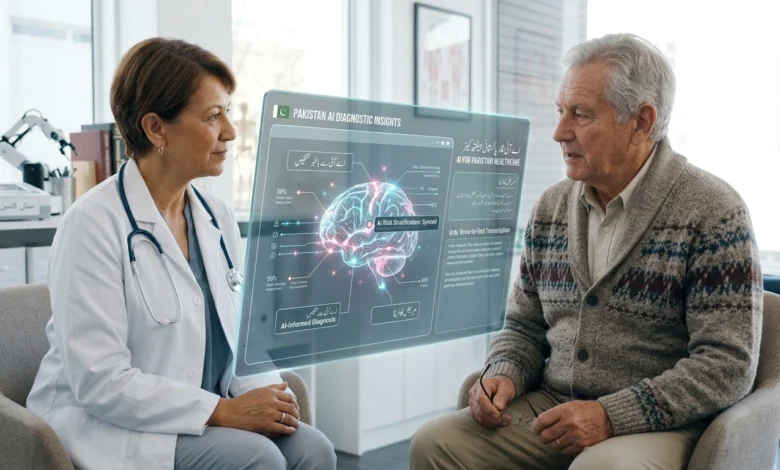
Short answer: No. AI won’t fully replace doctors because healthcare depends on human judgment, communication, and accountability. Technology can support diagnosis, research, and administrative work, but doctors remain central to patient care and treatment decisions.
Healthcare is one of the fields generating the most buzz around AI. Modern systems can help read medical images, organize patient records, and spot patterns that assist clinicians.
But being a doctor is about a lot more than recognizing patterns in data. Doctors talk to patients, understand personal medical history, weigh treatment options, and make judgment calls in situations where no two cases are identical.
A patient might need emotional support, a clear explanation of a diagnosis, or guidance through a hard decision — and those parts of medicine rely heavily on human trust and connection.
The likely future of medicine involves doctors using better tools to work more efficiently, not being replaced by them. Technology can cut down on administrative load, freeing up more time for actual patient care.
What Jobs Are Safe From AI?
Short answer: Jobs built on human interaction, creativity, leadership, physical skill, and complex decision-making tend to be more resistant to automation. Technology will reshape many careers, but roles that lean on human judgment are unlikely to disappear entirely.
A lot of people search this exact question because they want to know which careers will hold up over time.
No job is guaranteed to stay exactly the same forever — technology touches nearly every industry in some way. But certain kinds of work are just harder to automate because they rely on qualities machines still struggle to replicate.
Careers that tend to need strong human involvement:
- Healthcare workers providing direct patient care
- Teachers guiding and supporting students
- Skilled tradespeople doing physical work
- Managers leading teams and making calls
- Creative professionals developing original work
- Counselors and others relying on emotional understanding
These jobs aren’t safe because they avoid technology — often the opposite is true. They tend to get stronger when human expertise is paired with modern tools rather than replaced by them.
The future workplace is likely to reward people who can use technology well while still holding onto the skills machines can’t easily copy.
What Actually Makes a Job Resistant to Automation?
Short answer: Jobs hold up better against automation when they require empathy, creativity, physical presence, unpredictable problem-solving, or accountability for major decisions.
A common misconception is that some jobs are entirely safe while others are doomed. In reality, most careers sit somewhere on a spectrum — parts of a job might get automated while other responsibilities stay firmly human.
A teacher might use AI to help build lesson materials, but classroom management and student support still take a person. A construction worker might use advanced tools on the job, but navigating a physical worksite, making safety calls, and adjusting to changing conditions still take human judgment. A business leader might rely on data tools, but understanding people, managing teams, and setting strategy still take a human at the wheel.
The deciding factor isn’t the job title — it’s the actual nature of the work involved.
What Are the Biggest Risks of AI?
Short answer: The biggest concerns center on misinformation, privacy, cybersecurity threats, job disruption, and misuse of the technology. Addressing these takes responsible development and real human oversight.
A total AI takeover may be unlikely, but there are legitimate risks worth paying attention to.
Misinformation is one of the biggest. AI can generate convincing text, images, and video, which makes it harder for people to tell accurate information from fabricated content.
Privacy is another. Many AI systems run on huge volumes of data, which raises real questions about how that information gets collected, stored, and used.
Cybersecurity is a growing concern too — like most technology, AI can be used for good or ill, and organizations need solid security practices to manage that risk.
Job disruption rounds out the list. Some roles will shift as automation spreads further, which makes ongoing education and skill-building more important than ever.
None of this points toward avoiding the technology altogether — it points toward building better systems and habits around using it responsibly.
How Can People Prepare for an AI-Driven Future?
Short answer: People can prepare by building adaptable skills, sharpening their digital literacy, and learning to work effectively alongside new tools.
The workplace of the future is likely to reward people who combine real expertise in their field with comfort using modern technology.
Rather than fixating on whether a job could theoretically be automated, it’s more useful to focus on how your own skills can become more valuable over time.
A few areas worth developing:
Human skills — Communication, leadership, creativity, and problem-solving are hard to automate because they depend on understanding people and situations, not just processing data.
Basic tech fluency — Nobody needs to become a programmer, but understanding how modern tools actually work helps people adapt faster as things change.
Ongoing learning — Industries shift constantly, and professionals who keep learning tend to weather those shifts better than those who don’t.
Pairing expertise with tools — The strongest workers going forward are likely to be the ones who deeply understand their field and know how to use technology to get better results.
The goal isn’t to compete against the technology — it’s to understand how it can support better outcomes.
FAQs
Can AI become more powerful than humans?
AI can become more advanced than humans in specific tasks such as processing large amounts of data or identifying patterns. However, current AI systems do not possess human consciousness, emotions, or independent reasoning in the way people do.
Will every job eventually be replaced by AI?
No. While AI is expected to automate certain repetitive and data-driven tasks, many careers will continue to rely on human judgment, creativity, communication, leadership, and problem-solving.
What jobs are least likely to be replaced by AI?
Roles that depend on interpersonal relationships, creative thinking, hands-on work, leadership, and complex decision-making are generally considered less likely to be fully automated.
Should people be afraid of AI?
Rather than fearing AI, it is more useful to understand its capabilities and limitations. Like many previous technological advances, AI presents both opportunities and challenges depending on how it is developed and used.
Will AI replace accountants lawyers or doctors?
AI is expected to support professionals in these fields by improving efficiency and assisting with routine tasks. However, important decisions, ethical responsibilities, and expert judgment are likely to remain under human control.
Final Thoughts
The question of whether AI will take over the world really points to a bigger conversation about the future of technology and society. Current AI systems aren’t capable of controlling humanity or operating on their own. The more realistic story is how AI reshapes jobs, businesses, and everyday life.
Some tasks will get automated, and some professions will evolve. But work built around creativity, human connection, judgment, and responsibility will keep holding real value.
This isn’t really a story about humans versus machines. It’s about how people adapt, keep learning, and use technology as a tool to work better and solve harder problems.