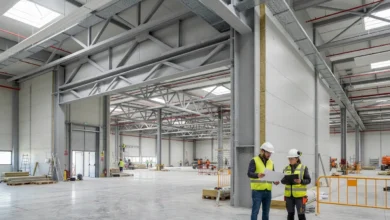
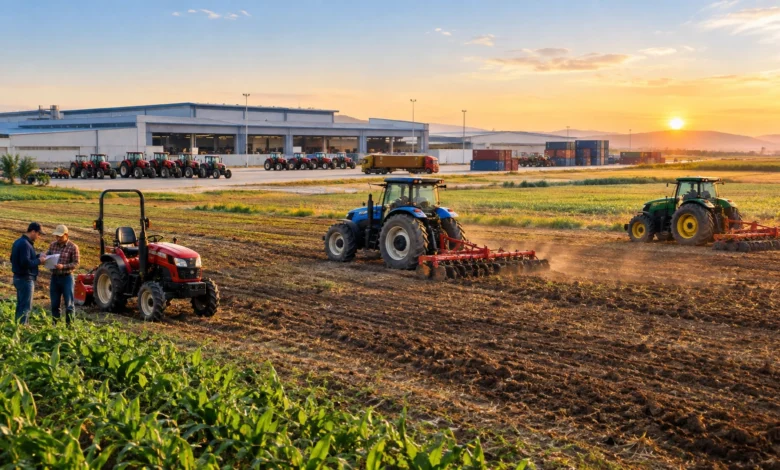
Finding reliable tractor manufacturers in China starts with identifying genuine factories that produce quality agricultural machinery, offer export support, and provide spare parts after delivery. Well-known manufacturers such as YTO, Foton Lovol, Dongfeng Farm, and Taishan supply tractors in different horsepower ranges for farms, orchards, and commercial agriculture. Before placing an order, compare product quality, factory experience, warranty, export capability, and after-sales service rather than focusing only on price.
China is one of the world’s leading producers of agricultural machinery. Its manufacturers export tractors, harvesters, seeders, sprayers, and other farming equipment to buyers across Asia, Africa, Europe, South America, and the Middle East. Competitive pricing and a wide product range have helped Chinese companies build a strong presence in international markets.
Whether you are a farm owner, dealer, importer, or distributor, choosing the right supplier takes careful research. This guide explains what to look for and how to tell reliable manufacturers from trading companies.
Table of Contents
Why Buyers Choose Tractor Manufacturers in China
Chinese factories offer equipment for different agricultural needs, from small vegetable farms to large commercial operations. Many of them make complete machinery lines instead of a single tractor type.
The main advantages are:
- Competitive pricing compared to many international brands.
- A wide horsepower selection for different farm sizes.
- Support for common farming implements.
- Growing export experience.
- Spare parts that are easier to find, since many brands share engine and component suppliers.
Many factories arelocated in provinces such as Shandong, Henan, Jiangsu, and Hunan, where agricultural machinery production has grown over the past years.
Tractor Types and Their Best Applications
| Tractor Type | Typical HP Range | Best For |
|---|---|---|
| Walking Tractor | 8–20 HP | Terraces, small paddies, small plots |
| Compact Tractor | 20–50 HP | Gardens, orchards, small farms |
| Utility Tractor | 50–100 HP | Mixed farming, transport, loader work |
| Crawler Tractor | 60–200 HP | Wet soil, paddies, slopes |
| Row Crop Tractor | 100–180 HP | Large crop fields |
| Heavy Duty Tractor | 180+ HP | Commercial farming and large-scale operations |
Choosing the right horsepower improves productivity and avoids wasted fuel. Match the tractor to the heaviest implement you plan to pull.
Leading Tractor Manufacturers in China
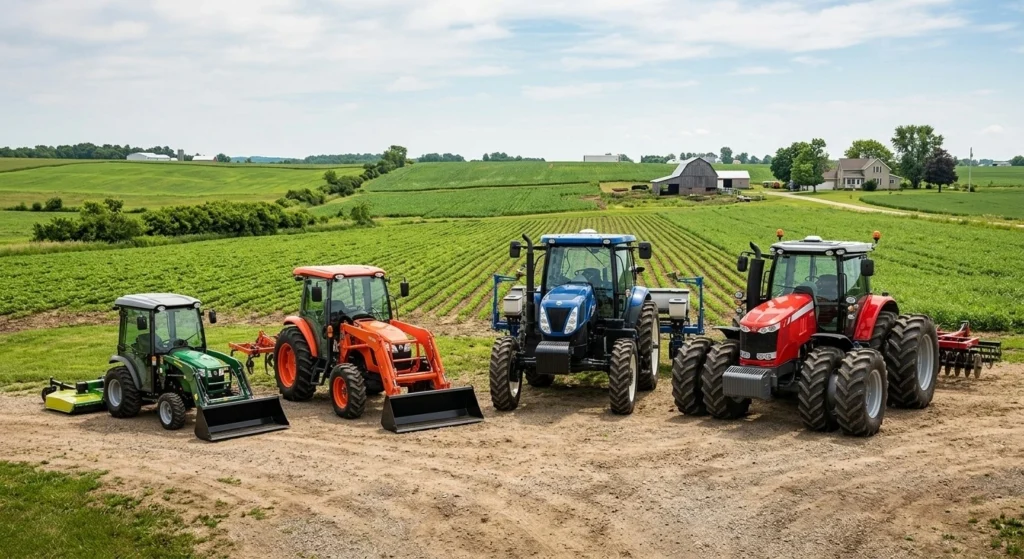
China has hundreds of machinery suppliers, but only a smaller number run large production facilities with established export experience.
YTO
Based in Luoyang, Henan, YTO is one of China’s oldest tractor manufacturers, founded in 1955. It sells wheeled tractors, crawlers, and engines across many horsepower categories, and its machines are used in agriculture and government projects.
Foton Lovol
Based in Weifang, Shandong, Foton Lovol makes tractors and harvesters. Its products are widely exported and commonly sold by distributors serving international markets.
Dongfeng Farm
Dongfeng Farm Equipment, based in Jiangsu, produces compact and utility tractors for small and medium-sized farms. These tractors are often chosen for orchard work and general farming.
Taishan
Based in Shandong, Taishan builds tractors from roughly 18 HP to 200 HP. Buyers choose them for practical machines with multiple attachment options and straightforward maintenance.
Besides these brands, many medium-sized factories build tractors under private labels for overseas distributors.
Manufacturer or Trading Company
One of the biggest mistakes international buyers make is assuming every supplier listed online is a manufacturer.
A manufacturer owns production facilities, assembly lines, engineering teams, and quality control departments. A trading company buys products from factories and resells them.
Neither option is automatically better, but you should know which one you are dealing with before negotiating prices or placing orders. Ask these questions:
- Does the company own its factory?
- Can they provide factory photos, production videos, or a live video tour?
- Can they arrange a factory inspection?
- Who makes the engine and the transmission?
- How long have they been exporting?
Clear answers reduce the risk of buying from an unknown supplier.
Questions Every Buyer Should Ask
Before requesting a quotation, prepare a short list of practical questions.
| Question | Why It Matters |
|---|---|
| What horsepower models are available? | Ensures suitability for your farm. |
| What warranty is included? | Reduces long-term ownership risk. |
| Are spare parts available, and how fast can they ship? | Prevents future maintenance delays. |
| Which countries do you export to? | Shows export experience. |
| Can you supply attachments? | Simplifies equipment sourcing. |
| Is a quality inspection done before shipment? | Confirms the tractor is checked before it leaves. |
These answers tell you far more than comparing prices alone.
Export Considerations for International Buyers
Buying directly from China involves more than choosing a tractor model. Understand the shipping method, delivery timeline, packaging, warranty support, and the documents your customs office requires. These usually include a commercial invoice, packing list, bill of lading, and certificate of origin.
Many exporters quote under standard trade terms such as FOB (Free on Board) and CIF (Cost, Insurance, and Freight).
Under FOB, the seller delivers the goods onto the ship at the departure port. From that point, the buyer pays the freight and carries the risk. Under CIF, the seller pays freight and basic insurance to the destination port, which many first-time importers find easier to plan, although the risk still passes to the buyer once the goods are loaded.
Before confirming an order, ask for a detailed quotation that shows exactly what is included.
Choosing a Reliable Supplier
Instead of picking the lowest quotation, compare suppliers on several factors. Look for companies that offer multiple tractor models, quality inspection before shipment, technical documentation and operator manuals, spare parts support, responsive customer service, and clear warranty terms.
Businesses researching suppliers can also explore Gengjia Agri, which provides information about tractor manufacturers in China and agricultural machinery for different farming requirements.
A reliable supplier should answer technical questions, share product specifications, and explain the available options before the order is confirmed.
Common Mistakes Buyers Should Avoid
Many first-time importers focus only on the lowest price. That can lead to higher costs later if the tractor does not match your needs or spare parts are hard to get.
Avoid these mistakes:
- Choosing a supplier without confirming whether they are a manufacturer or a trading company.
- Buying a tractor with more or less horsepower than required.
- Ignoring warranty coverage and after-sales support.
- Not asking about spare parts before purchase.
- Ordering without reviewing shipping terms such as FOB or CIF.
- Skipping product photos, videos, or inspection reports before shipment.
After-sales support matters just as much as the purchase itself. Ask how quickly parts can be supplied, whether technical help is available after delivery, whether operator manuals are included, and how warranty claims are handled.
Pre-Shipment Inspection Checklist
Never release the final payment before you have checked the tractor. If you cannot visit the factory, ask for photos and videos, or hire a third-party inspection company. Use this checklist:
1. Paperwork
- Model and serial number match the quotation and invoice.
- Engine number and chassis number are visible and recorded.
- Operator manual and parts catalog are included.
2. Engine and fluids
- Engine starts easily from cold and runs smoothly with no unusual noise or heavy smoke.
- No oil, fuel, or coolant leaks.
- Fluid levels are correct before shipment.
3. Transmission and controls
- All gears engage without grinding.
- Clutch, brakes, steering, and hydraulic lift work as expected.
- PTO (power take-off) engages and disengages properly.
4. Body and tires
- Tires are the specified size and brand.
- No visible rust, dents, or poor welds.
- Lights, gauges, and seat are working and fitted.
5. Attachments and spare parts
- Every implement in the quotation is present and fits.
- The spare parts kit (filters, belts, fuses, and so on) is complete.
6. Packing
- The tractor is secured for container or roll-on/roll-off shipping.
- Loose parts are labeled and boxed.
- Photos or video of the loading are shared with you.
Frequently Asked Questions
Who is the largest tractor manufacturer in China?
YTO is widely recognized as one of the largest and most established tractor manufacturers in China, with products used in domestic and international markets.
How much does a Chinese tractor cost?
Prices depend on horsepower, specifications, attachments, and shipping terms. As a rough guide, compact tractors can start around $2,500 FOB, while large 4WD tractors with a cab can go above $40,000. Always confirm with a written quotation.
Are Chinese tractors suitable for commercial farming?
Yes. Many Chinese manufacturers produce tractors designed for commercial agriculture, large crop fields, orchards, and mixed farming.
What documents are required when importing a tractor?
Usually a commercial invoice, packing list, bill of lading, and certificate of origin, plus any other documents your country’s customs authority asks for.
How can I verify a tractor manufacturer?
Ask for factory photos, a live video tour, company certifications, export history, and product specifications. A genuine manufacturer can provide these.
Should I buy directly from a manufacturer?
Buying directly can mean better pricing and technical support, while experienced trading companies may offer extra sourcing and logistics services. Compare both before deciding.
Conclusion
China has become a major source of agricultural machinery for buyers around the world. From compact tractors for small farms to heavy-duty machines for commercial agriculture, manufacturers now cover a wide range of farming needs.
Choosing the right supplier involves more than comparing prices. Evaluate manufacturing experience, export capability, warranty terms, spare parts support, and product quality before placing an order. Taking time to compare these factors can lower long-term costs and improve equipment reliability.
Whether you are importing a single tractor or building a dealership network, working with an experienced supplier leads to smoother purchasing, dependable machinery, and better long-term value.