A custom healthcare software development company designs and builds applications around the clinical and administrative workflows of healthcare organizations.
These systems may support patient records. Appointments. Billing. Telehealth. Care coordination. Remote monitoring. Staff workflows. Medical imaging. Reporting. Or communication between patients and providers.
Healthcare software requires more planning than a general business application. The development team must understand sensitive health data. User permissions. Clinical workflows. System integrations. Audit records. Data migration. And long term maintenance.
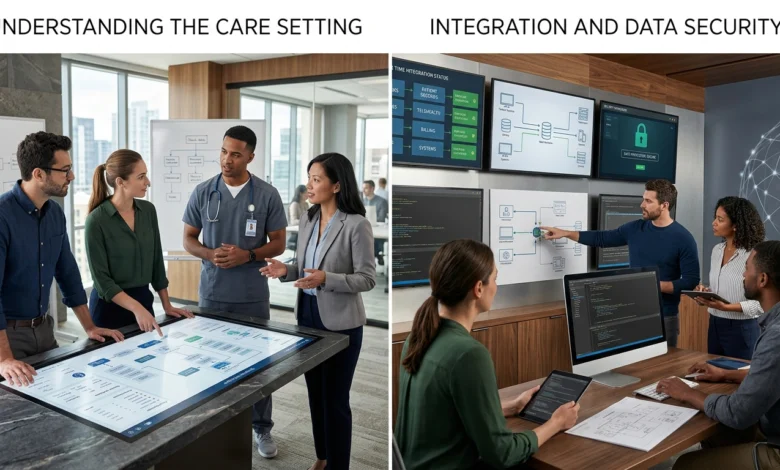
A suitable development partner should not begin with a list of features. It should first understand the care setting. The users. The information being handled. The systems already in place. And the problem the new application must solve.
Table of Contents
What Custom Healthcare Software Development Includes
Custom healthcare software development creates a system for the specific needs of a healthcare provider. Health technology company. Medical practice. Hospital. Laboratory. Pharmacy. Payer. Or care network.
The software may be created as a new product. It may replace an outdated application. It may also connect existing systems that do not exchange information properly.
A complete custom healthcare software development service may include discovery. Workflow analysis. Interface design. Application engineering. Healthcare integrations. Security planning. Data migration. Testing. Deployment. Staff training. And ongoing support.
The scope depends on the project.
A patient portal has different requirements from a medical billing system. A remote monitoring platform has different risks from an internal scheduling tool. A clinical application may also require a higher level of validation than an administrative application.
Organizations that need a broader explanation of planning and delivery can review the custom software development guide.
When Healthcare Organizations Need Custom Software
Ready made healthcare software can work well when the process is standard and the available product already supports the required workflow.
Custom development becomes more suitable when existing products create repeated manual work. Restrict important processes. Or fail to connect with the systems used by the organization.
A clinic may need a patient intake process that works differently from the forms offered by its current platform. A hospital may need to connect several departments and data sources. A health technology company may need to launch a product for a specific care model.
Custom medical software development may also be considered when an organization is dealing with outdated systems. Duplicate data entry. Poor reporting. Limited patient access. Difficult billing workflows. Or software that cannot support new locations and users.
The decision should be based on a defined operational or clinical problem.
Building a custom platform without a measurable purpose can create unnecessary cost and maintenance.
Healthcare Software Solutions That Can Be Custom Built
Healthcare software covers a wide range of clinical and administrative functions.
| Software type | Main purpose | Typical users |
|---|---|---|
| EHR or EMR system | Manages patient and clinical records | Physicians. Nurses. Clinical staff |
| Patient portal | Gives patients access to services and information | Patients. Care teams. Support staff |
| Telehealth platform | Supports remote consultations and communication | Providers. Patients. Coordinators |
| Practice management system | Manages appointments and daily operations | Front desk. Managers. Providers |
| Medical billing system | Manages charges and claims and payments | Billing teams. Finance staff |
| Remote monitoring platform | Collects health information outside the facility | Patients. Nurses. Care managers |
| Healthcare mobile application | Provides services through phones and tablets | Patients. Clinicians. Field teams |
| Laboratory system | Tracks samples and results and laboratory workflows | Laboratory staff. Providers |
| Pharmacy system | Supports prescriptions and medication workflows | Pharmacists. Providers. Patients |
| Medical imaging platform | Stores and displays imaging information | Radiologists. Technicians. Specialists |
| Healthcare reporting system | Combines operational and clinical data | Managers. Analysts. Leadership |
| Care coordination platform | Connects teams involved in patient care | Providers. Coordinators. Social services |
The development team should define the intended users and decisions before selecting the technology.
Custom EHR and EMR Development
An EHR or EMR system stores and organizes clinical information.
It may include patient history. Diagnoses. Medications. Allergies. Clinical notes. Lab results. Treatment plans. Appointments. And documents.
Building a complete clinical record system is a major project. The application must support accurate documentation and controlled access. It must also connect with other healthcare systems when information needs to move between providers and departments.
Some organizations do not need to replace the full EHR.
A smaller custom application may solve the problem by connecting to the existing EHR and providing a better workflow for a specific department or service.
This approach can reduce implementation risk. It can also preserve systems that already work well.
Patient Portal Development
A patient portal gives patients controlled access to information and services.
The portal may allow a patient to schedule an appointment. Complete intake forms. Review selected records. Download documents. Pay a bill. Request a refill. Or send a secure message.
The portal should be designed for people with different levels of technical experience.
Important actions should be easy to find. Medical language should be clear. Error messages should explain what the patient needs to do next.
Access must also be protected.
The development team should plan identity verification. Password recovery. Session control. Proxy access. Minor accounts. Caregiver access. And account removal.
A patient portal should not expose more information than the user is permitted to view.
Telehealth Software Development
Telehealth software supports consultations when the patient and provider are in different locations.
A platform may include appointment booking. Video visits. Secure messaging. Consent forms. Patient intake. Waiting rooms. Documentation. Prescriptions. Payments. And follow up instructions.
The development team should test the platform under real conditions.
Patients may have slow internet connections. Older devices. Limited technical experience. Or accessibility needs.
The software should explain how to join a visit. What to do when the camera or microphone fails. And how to contact the care team when the session is interrupted.
The clinical workflow must also continue after the call. Notes. Orders. Billing. Follow up tasks. And patient communication should connect with the relevant records.
Practice Management Software
Practice management software supports the administrative work of a medical practice.
It may manage appointments. Provider schedules. Patient registration. Insurance information. Staff tasks. Documents. Payments. And operational reports.
A custom system may be useful when the practice operates several locations or uses a workflow that standard products do not support.
The application should reduce repeated entry between scheduling and billing and patient records.
It should also make responsibilities clear.
Front desk employees need different access from clinicians. Billing staff need different access from medical assistants. Managers may need reporting without access to every clinical note.
Medical Billing and Revenue Cycle Software
Medical billing software helps organizations record charges. Prepare claims. Monitor payer responses. Post payments. Track patient balances. And review unpaid accounts.
A custom billing system may be created for a specialist workflow or connected with an existing EHR and clearinghouse.
The development team must understand how information moves from the clinical encounter into the billing process.
A missing code or incorrect insurance field can delay payment. The software should identify incomplete information before the claim is submitted.
Reporting should help staff find the reason for delayed revenue.
A total unpaid balance is not enough. Users may need to filter claims by payer. Provider. Location. Age. Status. Or rejection reason.
Remote Patient Monitoring Software
Remote patient monitoring software collects health information while the patient is outside the clinic or hospital.
Data may come from a connected device. A mobile application. A patient form. Or a care team member.
The platform may track measurements. Symptoms. Medication activity. Care plan tasks. Or alerts.
The organization must define what happens after data is received.
Who reviews the information?
Which values create an alert?
How quickly must the alert be handled?
What happens when the device stops sending data?
The application should support the clinical response. It should not only collect information.
Healthcare Mobile Application Development
A healthcare mobile application may support patients. Clinicians. Field workers. Caregivers. Or administrators.
Patient applications may provide appointment access. Medication reminders. Remote monitoring. Messages. Education. Or personal records.
Clinical applications may help staff review tasks. Capture information. Access schedules. Or document services away from a desk.
Mobile healthcare software must protect information when a device is lost or shared.
The development plan should address account security. Local storage. Session expiration. Notifications. Screenshots. File downloads. And device compatibility.
Healthcare Interoperability and System Integration
Healthcare organizations often use several platforms at the same time.
A new application may need to exchange information with an EHR. Laboratory platform. Pharmacy system. Billing service. Imaging system. Scheduling tool. Or patient identity service.
Interoperability means that systems can exchange information in a usable and consistent way.
Common healthcare integration methods include APIs. HL7 messages. FHIR resources. DICOM files. And structured data imports.
The correct method depends on the systems and information involved.
A development company should not simply promise EHR integration.
It should explain which information will move. Which system owns the original record. How often the information updates. How errors are handled. And what happens when one system is unavailable.
Integration testing should use realistic records and workflows.
A connection may appear successful while still placing information in the wrong field or creating duplicate patient records.
HIPAA and Healthcare Data Protection
Healthcare software used in the United States may need to support the organization’s HIPAA obligations when it creates. Receives. Maintains. Or transmits protected health information.
A development company should not claim that one feature makes an application compliant.
Compliance depends on the complete system and the way the organization operates it.
The software may require encryption. Controlled user access. Audit logs. Secure backups. Session management. Authentication controls. Incident procedures. And agreements with relevant service providers.
The organization must also manage employee training. Device security. Account removal. Data retention. And access reviews.
A technically secure application can still create risk when permissions are configured incorrectly.
The custom healthcare software development company should document security responsibilities before development begins.
Role Based Access and Audit Records
Healthcare applications should limit information according to the user’s role and responsibilities.
A receptionist may need patient contact details and appointment information. A clinician may need the medical record. A billing employee may need insurance and payment information. A system administrator may need account controls without unrestricted access to clinical notes.
Permissions should be specific enough to support real work.
Giving every staff member full access may simplify setup. It also increases risk.
Audit records should show important activity such as account access. Record changes. Exports. Permission changes. And administrative actions.
The organization should decide how long these records are kept and who can review them.
Healthcare Software Usability
Healthcare software is often used in busy and stressful environments.
A clinician may need to record information during a patient visit. A receptionist may be handling calls while registering patients. A patient may be using the portal while worried about a health issue.
The interface should reduce unnecessary steps.
Frequent actions should be easy to find. Required fields should be clear. Warnings should explain the issue. Important clinical information should not be hidden by decorative design.
Usability testing should include actual user roles.
Managers and developers may understand the system differently from nurses. Providers. Patients. Or billing staff.
Feedback should be collected before the complete application is built.
Accessibility Requirements
Healthcare applications should be usable by people with different physical and cognitive needs.
The design may need readable text. Keyboard access. Screen reader support. Clear labels. Sufficient contrast. Captions. And alternatives to actions that require precise movement.
Accessibility should be considered during design and development.
Trying to correct every issue shortly before launch can be expensive and incomplete.
Patient facing applications should also avoid unnecessary medical language and confusing instructions.
Custom Healthcare Software Development Process
A structured development process reduces risk and helps the organization confirm requirements before large amounts of code are written.
1. Clinical and Operational Discovery
The team studies the current workflow.
It identifies users. Decisions. Data. Problems. Existing systems. Reporting needs. And security responsibilities.
2. Requirements and Scope
The project is divided into required functions and future improvements.
The first release should solve the central problem without becoming too large to test and manage.
3. Workflow and Interface Design
The team creates user flows and prototypes.
Healthcare staff and other users review the proposed process before engineering begins.
4. Architecture and Integration Planning
The technical team plans data storage. Authentication. Permissions. Hosting. Backups. Monitoring. And system connections.
5. Development and Review
The application is built in reviewable stages.
Stakeholders see working functions and provide feedback throughout the project.
6. Testing and Validation
The team tests features. Permissions. Integrations. Performance. Security controls. And complete user workflows.
7. Migration and Deployment
Existing data is cleaned and transferred.
The application is introduced through a planned launch with support and recovery procedures.
8. Maintenance and Improvement
The team monitors errors. Security updates. User feedback. Performance. And changing integration requirements.
Healthcare Software Testing
Healthcare applications should be tested beyond the normal successful workflow.
The team should check what happens when a user enters incomplete information. Selects the wrong patient. Loses internet access. Uploads an invalid file. Or tries to access a restricted record.
Integration testing should confirm the meaning of the data and not only whether the connection is active.
Performance testing is important when many users or records may be involved.
Security testing should review authentication. Permissions. Sessions. Exports. Logs. And administrative controls.
User acceptance testing should involve the people who will use the application in daily work.
Data Migration From Existing Healthcare Systems
Data migration can be one of the most difficult parts of a healthcare software project.
Existing information may be stored in several systems. Spreadsheets. Scanned files. Or outdated databases.
Records may contain duplicates. Missing values. Different date formats. Inconsistent names. Or old categories that do not match the new system.
The migration plan should define which records will move. Which records will remain archived. How patient identities will be matched. And how totals will be verified.
The organization should also plan a secure method for transferring files.
A successful migration is not measured only by the number of imported records.
The data must remain accurate and usable in the new workflow.
Custom Healthcare Software Development Cost
The cost of custom healthcare software development depends on the scope and risk of the project.
A basic administrative application will normally require less work than a platform that stores clinical information and connects with several external systems.
Important cost factors include the number of user roles. Application platforms. Integrations. Reports. Workflows. Data migration requirements. Security controls. And testing depth.
A project may also require design research. Clinical consultation. Infrastructure. Staff training. Documentation. Monitoring. And long term support.
The lowest initial quote may not include all of these areas.
Compare proposals based on the same scope.
One company may include discovery. Testing. Migration. And support. Another may estimate only the engineering work.
Custom Software Versus Ready Made Healthcare Platforms
A ready made platform can be the better choice when the required workflow is common and the product already supports it.
It may provide faster setup. Existing training material. Regular updates. And established integrations.
Custom software provides more control. It can follow a unique clinical or business process and connect with specific systems.
It also requires more planning and ownership.
Healthcare organizations should consider a combined approach.
A standard EHR may continue to manage clinical records while a custom portal or workflow application handles a specific service.
This can provide flexibility without replacing every existing system.
How to Choose a Custom Healthcare Software Development Company
The right partner should understand both software delivery and healthcare workflows.
General technical experience is not enough when the application handles protected information or supports clinical work.
Ask how the company gathers requirements. Tests user roles. Plans integrations. Protects data. Handles migration. And supports the application after launch.
Review relevant project experience.
A company that has built a fitness application may not automatically understand EHR integration. Medical billing. Or clinical documentation.
The team should also explain which healthcare specialists will participate in discovery and review.
A strong custom healthcare software development company should be comfortable discussing risks and limitations.
It should not promise instant compliance or perfect integration without reviewing the systems involved.
Questions to Ask Before Hiring a Development Company
Ask the company to explain how it will document the current workflow and define the first release.
Request details about user permissions. Audit records. Encryption. Backups. Hosting. Integration testing. And data migration.
Confirm who owns the source code. Design files. Databases. Cloud accounts. And technical documentation.
Also ask who will maintain the software after launch.
The proposal should identify the project manager. Delivery team. Review schedule. Payment stages. Change process. And acceptance criteria.
Readers comparing general providers can use the custom software development companies guide when that page is published.
Warning Signs When Selecting a Healthcare Software Company
Be careful when a provider gives a final fixed price before reviewing the workflows and integrations.
A serious healthcare application normally requires discovery before the complete scope is known.
Another warning sign is using compliance as a marketing phrase without explaining security controls and customer responsibilities.
The proposal should not ignore data migration. Testing. Training. Documentation. Or post launch support.
The development team should also avoid forcing one technology into every project.
The architecture should reflect the users. Data. Integrations. Expected growth. And risk level.
Enterprise Healthcare Software Requirements
Hospitals and large healthcare networks may need to support many departments and locations.
The application may require single sign on. Central identity management. Detailed permissions. Large data volumes. Formal change control. Disaster recovery. And integration with several enterprise systems.
The rollout may need to happen in phases.
Large organizations should also plan governance. Support responsibilities. Performance monitoring. And long term vendor management.
These requirements are covered in more detail in the custom enterprise software development guide.
Healthcare Software Maintenance
Healthcare software needs ongoing maintenance after launch.
Operating systems. Browsers. Devices. Security requirements. And external integrations can change.
Maintenance may include security updates. Error correction. Performance improvement. Backup reviews. Monitoring. Integration updates. And user support.
The agreement should define response times and priorities.
An issue affecting a clinical workflow may require a faster response than a small visual problem.
The organization should also plan regular access reviews and permission updates.
Former employees should lose access quickly. Role changes should be reflected in the system. Old integrations should be removed when they are no longer needed.
Measuring Project Success
Success should be connected to the problem that led to the project.
A patient portal may be measured by completed registrations. Online appointment use. Support requests. And patient task completion.
A billing application may be measured through fewer claim errors. Faster payment posting. Or reduced manual entry.
A clinical workflow tool may be measured through documentation time. Missing information. Task completion. Or staff satisfaction.
Technical measurements may include application availability. Response time. Integration failures. Error rates. And security events.
The organization should define these measurements before launch.
FAQs
What does a custom healthcare software development company do?
It plans and builds healthcare applications around the requirements of a provider. Medical organization. Or health technology business. Services may include design. Development. Integration. Migration. Testing. Deployment. And support.
What software can be built for healthcare organizations?
Common examples include EHR and EMR systems. Patient portals. Telehealth platforms. Practice management applications. Medical billing systems. Remote monitoring platforms. Laboratory systems. And healthcare mobile applications.
Is custom healthcare software automatically HIPAA compliant?
No. Compliance depends on the complete technical and operational environment. The software must support appropriate safeguards. The organization must also manage access. Training. Policies. Devices. And service provider responsibilities.
How long does healthcare software development take?
The timeline depends on scope. User roles. Integrations. Data migration. Testing. Security requirements. And approval speed. A focused internal tool requires less time than a full clinical platform.
How much does custom healthcare software development cost?
Cost depends on the number of features. Platforms. Integrations. Users. Reports. Security controls. And migration requirements. A complete estimate normally requires a discovery phase.
Can a custom application connect with an existing EHR?
It may be possible through an API. HL7. FHIR. Data files. Or another supported integration method. The available connection depends on the EHR and the required data.
Should a healthcare organization replace its complete EHR?
Not always. A smaller custom application may solve the problem while the existing EHR continues to manage the main clinical record.
Who owns the healthcare software after development?
Ownership depends on the contract. The agreement should cover source code. Design files. Databases. Accounts. Documentation. And custom components.
Does healthcare software need ongoing maintenance?
Yes. It requires security updates. Monitoring. Error correction. Integration maintenance. Performance reviews. And user support.
Conclusion
A custom healthcare software development company should understand healthcare workflows before recommending features or technology.
The right system can improve patient access. Clinical coordination. Billing. Reporting. Or internal operations when standard platforms cannot support the required process.
Healthcare projects must also address data protection. User permissions. Interoperability. Migration. Testing. And long term maintenance.
Choose a partner that can explain these responsibilities clearly. Test the system with real users. And define measurable outcomes before development begins.