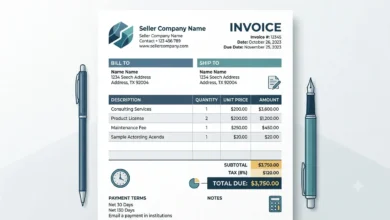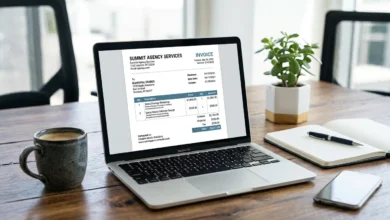
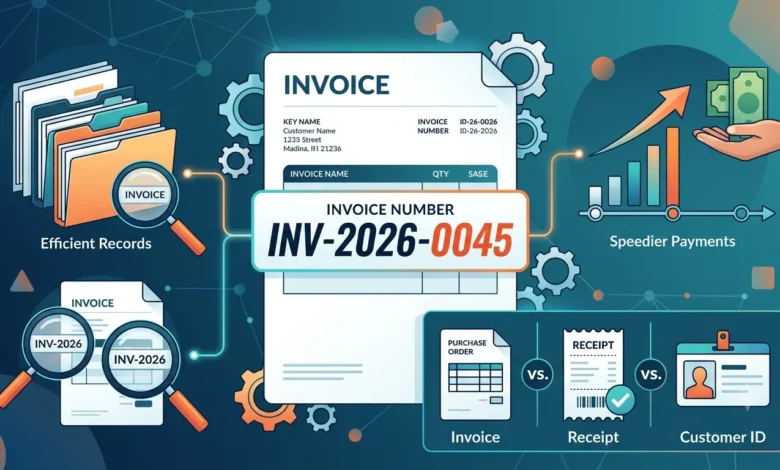
An invoice number is a unique code you assign to each invoice you send. It’s how you, your client, and your accountant tell one bill apart from another, especially when the same client gets billed more than once.
This guide covers what an invoice number actually does, the formats that work best, and a mistake that quietly gives away your sales numbers to anyone paying attention.
Table of Contents
What Is an Invoice Number?
An invoice number is a unique identifier printed on every invoice you issue. It can be numbers only, or a mix of letters and numbers, like INV-2026-014.
Every invoice you send needs its own number, and no two invoices should ever share one. That’s the whole point: without a unique number, there’s no clean way to say “this payment covers that invoice” once money starts moving.
Ready to create an invoice with a properly formatted number? Try our free Invoice Generator to build one in minutes.
Why Invoice Numbers Matter
They prevent double billing. Without a number, it’s easy to accidentally send the same invoice twice, or lose track of which one a client already paid.
They speed up payment. A client’s accounts payable team references the invoice number when processing payment. A missing or unclear number can delay that process by days.
They’re required for taxes. Most tax authorities expect a clean, sequential invoice trail. Gaps or duplicates can raise questions during a review.
They make records searchable. Filing invoices by number instead of by date or client name makes it instantly obvious if one is missing.
If you’re creating your first invoice, follow our step-by-step guide on How to Create an Invoice to learn how invoice numbers fit into a complete professional invoice.
Invoice Number vs. Other Business Numbers
This is where a lot of confusion starts. An invoice number looks similar to a few other reference numbers, but each one means something different.
| Number Type | Issued By | Issued When |
|---|---|---|
| Invoice number | Seller | After work is delivered, requesting payment |
| Purchase order (PO) number | Buyer | Before the order is fulfilled |
| Receipt number | Seller | After payment is received |
| Customer number | Seller | Identifies the client, not a specific transaction |
An invoice number tracks the bill itself. A PO number tracks the buyer’s original order. A receipt number confirms money already changed hands. Mixing these up on a document is one of the more common reasons an invoice gets sent back for correction.
Common Invoice Numbering Formats
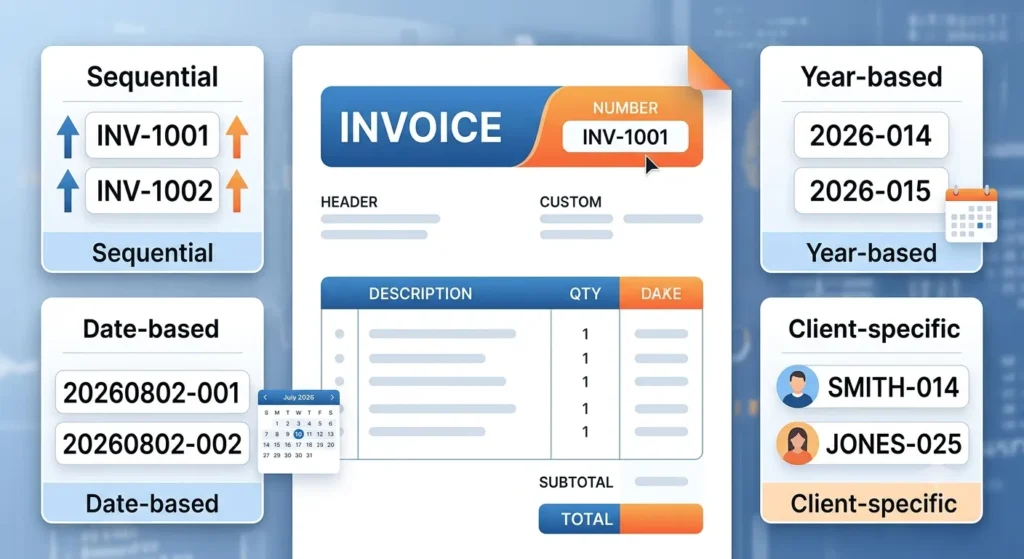
Sequential. Start at a number and count up with every invoice. Simple, and works well for freelancers or small businesses sending fewer than 50 invoices a year.
Year-based. Format like INV-2026-014, where the counter resets to 001 each January. This keeps numbers shorter and makes it obvious when an invoice was issued.
Date-based. Combines the full date with a sequence, like 20260801-001. Useful for businesses issuing a high volume of invoices in a short window.
Client-specific. Uses a client code as a prefix, like SMITH-014. Helpful once you’re managing invoices across many different clients.
Most accountants recommend starting at 1001 rather than 1. It looks more established, and it leaves room to zero-pad as your invoice count grows (0001, 0002, and so on), which keeps everything sorting correctly in a spreadsheet.
The Privacy Problem With Sequential Numbers
Here’s something most guides don’t mention. If your invoices are numbered plainly and sequentially, like INV-045 this month and INV-052 next month, anyone who receives two of them can subtract one from the other and estimate how many invoices you sent in between. That’s a rough read on your sales volume, handed to a client or competitor without you realizing it.
Year-based or client-specific formats largely solve this, since the sequence resets often enough, or is broken up by client, that the gap between any two numbers a single recipient sees doesn’t reveal much.
How to Handle Voided or Cancelled Invoices
Never delete a voided invoice number or skip past it silently. Keep it in your records marked as “VOID,” with a short note explaining why.
This matters because gaps in a numbering sequence look suspicious during a tax audit. A documented void explains the gap. An unexplained one raises questions.
Also Read: Commercial Invoice: Meaning, Example Format, and When to Use It
Where Does the Invoice Number Go?
Place it near the top of the invoice, usually right under or beside the word “Invoice.” It should be one of the first things a client sees, not buried in the fine print at the bottom.
If you’re saving invoices as digital files, use the invoice number as the file name too, something like INV-2026-014.pdf. This makes searching your own records far faster than digging through files named “Invoice.pdf” over and over.
Most invoicing software auto-generates this number for you, so you rarely need to track it manually once you’re using a tool instead of a spreadsheet.
Is an Invoice Number Legally Required?
In many countries, yes. Businesses that charge VAT, for example, are generally required to issue invoices with sequential numbers as part of standard tax compliance. Even where it isn’t strictly mandated, most accountants treat a missing invoice number as a red flag, since it makes an invoice harder to verify and easier to dispute.
Common Invoice Numbering Mistakes
Restarting the sequence randomly
Switching formats or restarting the count mid-year makes your own records harder to search later.
Reusing a number after voiding an invoice
Once a number is used, even for a cancelled invoice, retire it. Reusing it creates duplicate records that confuse both your bookkeeping and your client’s.
Using unpadded numbers
“INV-9” sorts after “INV-10” in most spreadsheets, since it’s comparing text, not numeric value. “INV-0009” avoids the problem entirely.
Running separate businesses off the same sequence
If you operate more than one business, keep each on its own numbering series. Overlapping numbers between two businesses confuses your accountant fast.
FAQs
What is an invoice number used for?
An invoice number identifies a specific bill so it can be tracked, referenced during payment, and matched against your accounting records. It prevents duplicate billing and speeds up payment processing.
Can I reuse an invoice number?
No. Every invoice number should be unique, even if a previous invoice was voided or cancelled. Reusing a number creates confusion in your financial records.
Do I need to start my invoice numbers at 1?
No. Many businesses start at 1001 or another higher number, since it looks more established and leaves room to zero-pad as invoice volume grows.
What’s the difference between an invoice number and a PO number?
A purchase order number is issued by the buyer before an order is fulfilled. An invoice number is issued by the seller afterward, when requesting payment.
Do proforma invoices need an invoice number?
Not usually. A proforma invoice is a preliminary estimate, not a request for payment, so it typically doesn’t need to follow your regular invoice numbering sequence.
What invoice number format should I use?
Sequential numbering works fine for low invoice volume. Year-based or client-specific formats work better as your business grows, since they keep records easier to search and reduce what a sequential gap reveals about your sales volume.