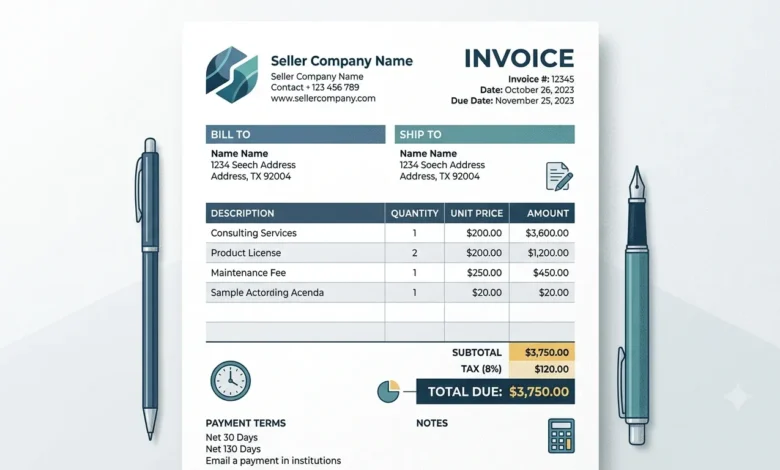
An invoice example shows exactly how a real bill should look what fields go where, how line items are laid out, and how totals are calculated. Below you’ll find three complete, ready-to-reference invoice examples (simple, professional, and business/product-based), a full format breakdown, and the difference between an invoice, a bill, and a receipt.
Key Takeaways
- Every invoice needs a minimum set of fields: seller info, buyer info, invoice number, date, line items, and total due.
- A simple invoice is lightweight and ideal for freelancers or one-off services.
- A professional invoice adds branding, payment terms, and PO numbers best for agencies and recurring clients.
- A business invoice is built for product-based sales, with SKUs, quantities, discounts, and shipping details.
- An invoice is not the same as a bill or a receipt timing and purpose differ.
Table of Contents
What Is an Invoice? (Quick Recap)
An invoice is a formal document a seller sends to a buyer requesting payment for goods or services already provided or agreed upon. It lists what was sold, the price, and the payment terms, and it’s used for accounting and tax records. If you’re comparing it to a pre-sale estimate, that’s a different document see our Proforma Invoice guide for that distinction.
What Should Every Invoice Include?
Regardless of format or business type, these fields should always be present:
| Field | Description |
|---|---|
| Seller details | Business name, address, contact info |
| Buyer details | Name, company, billing/shipping address |
| Invoice number | Unique, sequential reference |
| Issue date | Date the invoice was created |
| Due date | Payment deadline |
| Line items | Description, quantity, unit price |
| Subtotal, tax, total | Clear breakdown of amount owed |
| Payment terms | Accepted methods, due timeframe, late fee policy |
Simple Invoice Example
A simple invoice works best for freelancers, consultants, or one-off jobs where there aren’t many line items. It keeps only the essentials no extra branding or complex breakdowns.
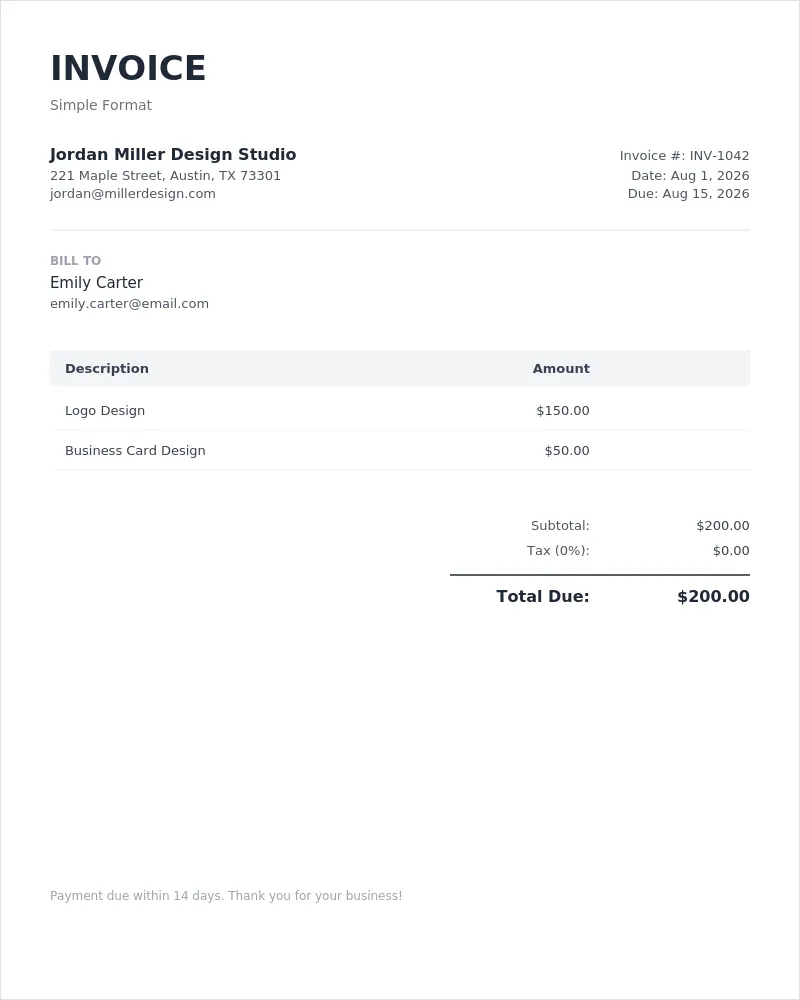
What makes it simple: just a name, a short description, one flat line-item list, and a total. No PO numbers, no tax breakdown complexity ideal when you’re billing a single client for a single deliverable.
Professional Invoice Example
A professional invoice is what agencies, consultants, and service businesses use for ongoing or higher-value client work. It includes branding, a PO number, itemized rates, and clear payment terms.
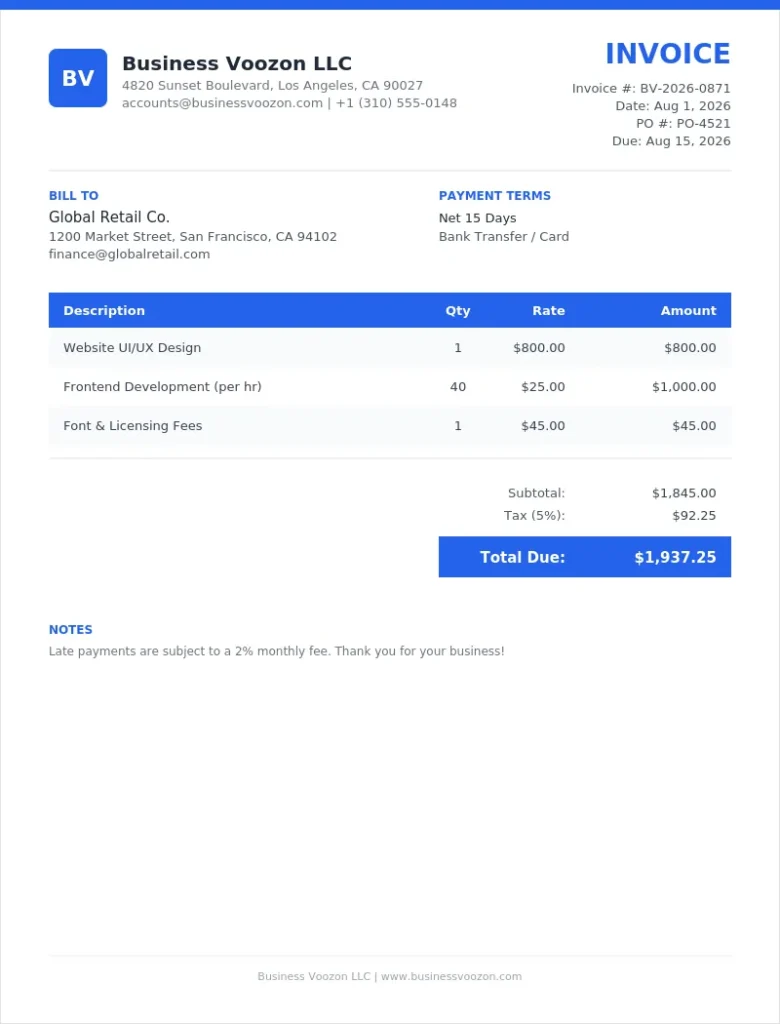
What makes it professional: a logo/branding block, itemized quantity × rate columns, a PO number field for corporate clients, visible payment terms, and a notes section for late-fee policies — all of which build trust and reduce payment delays.
Business Invoice Example (Product-Based)
A business invoice is built for companies selling physical products — wholesalers, manufacturers, and retailers. It includes SKUs, shipping details, and discount/tax breakdowns that service invoices don’t need.
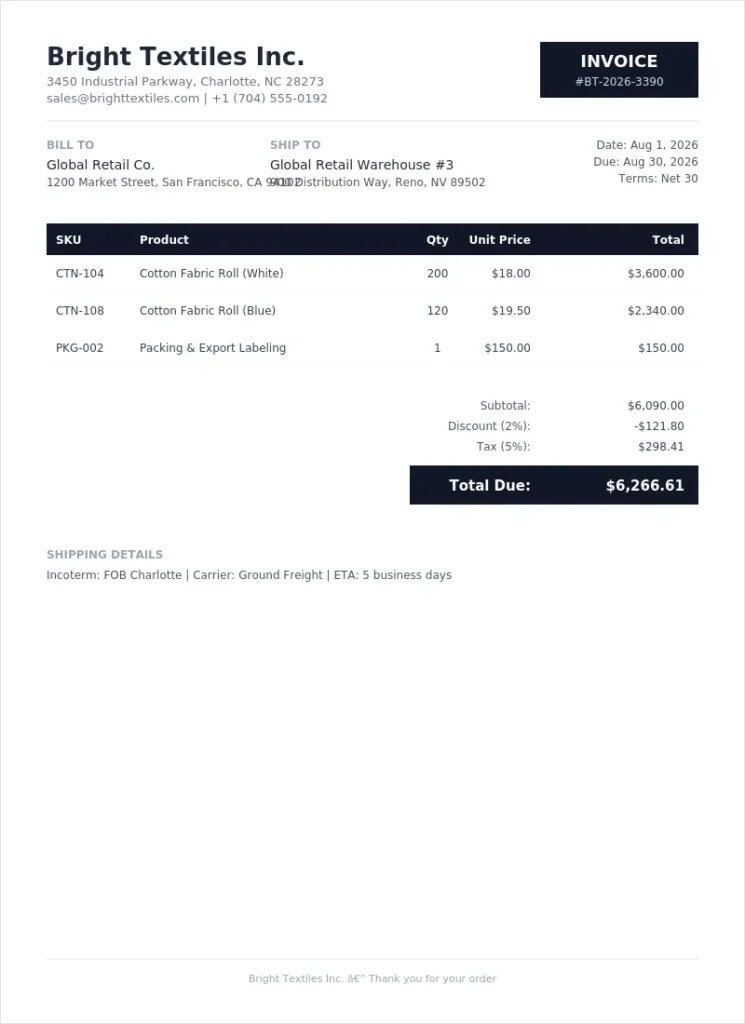
What makes it business-grade: SKU codes for inventory tracking, separate Bill To/Ship To addresses, per-unit pricing across multiple products, discount handling, and shipping/incoterm details necessary for wholesale and export transactions.
Invoice Format Breakdown
Every invoice format above shares four structural zones. Understanding these makes it easy to build or customize your own:
- Header zone — business name, logo, invoice number, and dates. This is the first thing a buyer sees, so it should clearly say “Invoice” and be easy to scan.
- Party zone — who’s billing whom. Includes seller info and buyer (and sometimes shipping) info side by side.
- Line items zone — the core table: description, quantity, rate, and amount. This is where clarity matters most vague descriptions cause payment delays and disputes.
- Totals & terms zone — subtotal, tax, discounts, grand total, and payment terms/notes. This is where the buyer confirms exactly what they owe and how to pay.
Invoice vs Bill vs Receipt
These three terms get used interchangeably, but they represent different stages of a transaction:
| Aspect | Invoice | Bill | Receipt |
|---|---|---|---|
| Issued by | Seller | Seller | Seller |
| Issued when | Before payment, detailing what’s owed | Before payment, simpler summary | After payment is received |
| Purpose | Formal request for payment, detailed record | Quick request for payment | Proof that payment was made |
| Detail level | High — itemized | Lower — summary only | Confirms amount paid, date, method |
| Used for accounting? | Yes | Sometimes | Yes, as proof of transaction |
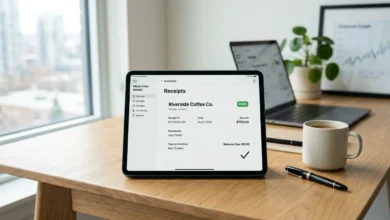
The simplest way to remember it: an invoice is sent, a bill is what the buyer calls that same invoice once they receive it, and a receipt only exists after the money has actually changed hands.
Common Mistakes in Invoice Examples
- Missing invoice number — makes tracking and referencing payments difficult for both sides.
- No due date — leads to inconsistent, delayed payments.
- Vague item descriptions — “Consulting” instead of “Website Consulting — 5 hours, June 2026” invites disputes.
- Missing tax or payment terms — buyers won’t know exactly what’s expected or how to pay.
- Inconsistent formatting across invoices — makes your business look unorganized and can confuse repeat clients.
Conclusion
Whether you need a simple one-line bill or a full product-based business invoice, the format matters less than getting the core fields right — clear line items, accurate totals, and payment terms your client can’t misunderstand. Instead of building any of these examples from scratch, you can create a professional, ready-to-send invoice in seconds with our Invoice Generator.
FAQs
What is an example of an invoice?
A basic invoice example includes seller and buyer details, an invoice number, a list of items or services with prices, and a total amount due see the simple, professional, and business examples above.
What are the 3 main types of invoices?
Common types include standard invoices (for services), commercial invoices (for products, especially international trade), and proforma invoices (pre-sale estimates).
What is the simplest way to write an invoice?
List your business name, the client’s name, a short description of the work, the amount, and a due date. The simple invoice example above shows this minimal structure.
What is the difference between an invoice and a bill?
They’re largely the same document an invoice is what the seller calls it when sending; a bill is what the buyer calls the same document once received.
What must legally be on an invoice?
Requirements vary by country, but most jurisdictions require the seller’s business details, an invoice number, the date, itemized charges, and the total amount, plus tax details where applicable.
Is a receipt the same as an invoice?
No. An invoice requests payment before or at the time of a transaction; a receipt confirms payment has already been made.